
Whitepaper: Coaching as a Way of Being
Aug 08, 2026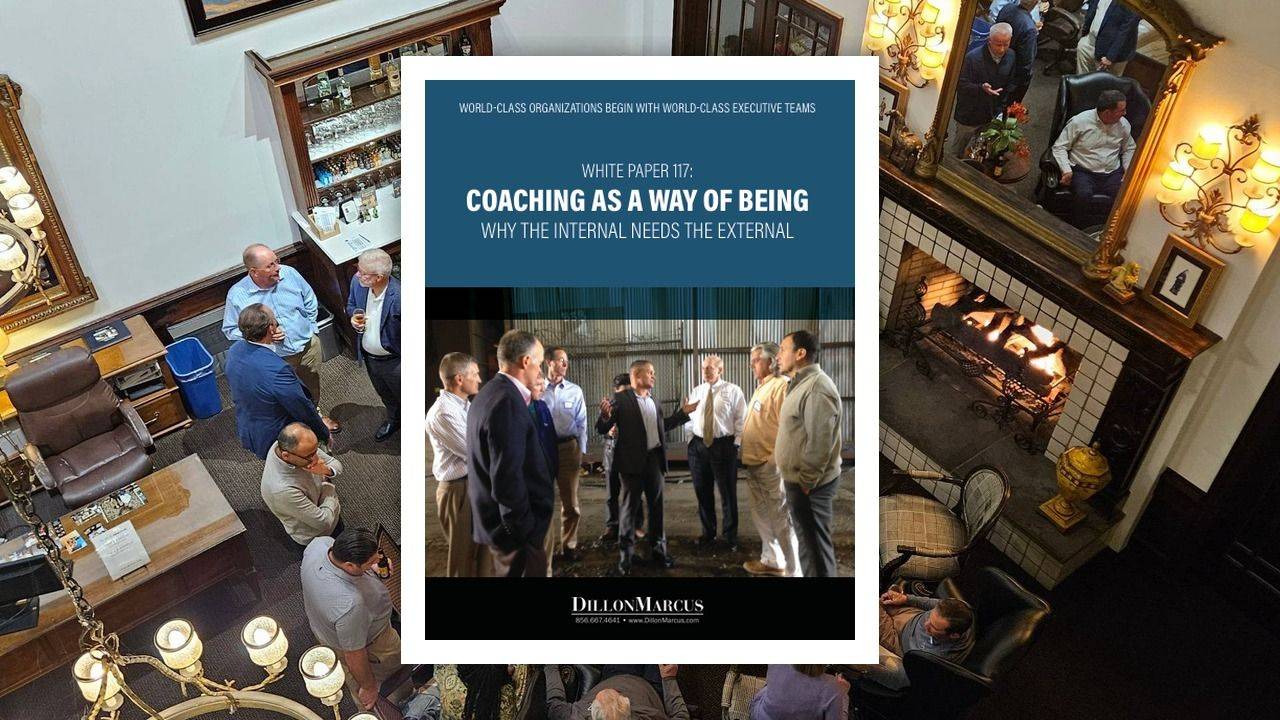
It is impossible to coach yourself. The reason is simple, one word: external. You can't see what you can't see. Every person and every organization has blind spots — and understanding why the internal always needs the external is at the heart of what makes coaching so valuable.
You Can't See What You Can't See
Blind spots exist just like the ones in a car — they're there, but you can't see them. They can represent assets, opportunities, and potential, as well as weaknesses and deficiencies. You only know what you know, and it's simply not possible to function at a higher level, much less a world-class one, if you're bound only to the resources you already have. That's not a lacking — it's human nature.
You could try to build the knowledge, contacts, and experience you need entirely on your own, but it's inefficient. If it takes 20 years to acquire that knowledge, how do you benefit from it now? The most efficient path is to build trusting relationships with people who already have it, ask them for help, and utilize it.
The One Caveat: Humility
The solution is simple, but it requires humility — being open to help, to knowledge, and to experience. No one accomplishes anything of value, let alone greatness, alone. Humility requires honesty, open-mindedness, and willingness; it's the opposite of arrogance, of believing you've got it all figured out. Once you have humility, the rest is easy: find resources who know how to get you where you want to go, ask for their help, and have the courage to try something new. It confronts your own sense of value and the belief that you need to do this alone — but the rewards are exponential growth in a much easier way. The adversary here is struggle itself: we place so much value on the grind that we sometimes choose struggle over the wisdom and ease of getting help.
Coaching Is Not a Thing to Do — It's a Way of Being
Coaching is a choice in how we live and work — having the humility, intelligence, and awareness to actively ask for help. No matter how much you know, it's a willingness to run things past someone with expertise who truly has your back. Questions as simple as "Can I run this past you?" or "I want to get better at this and you're really good at it" cut through superficial interactions and build trusting, meaningful relationships.
Leaders and managers need to coach too, but they can only take it so far because they lack external perspective, relationships, and resources. Positioned correctly, an external partner is a strategic ally to management — there to amplify, accelerate, and advance the objectives of the leaders whose people they coach. There's no competition, only collaboration and support.
Why Full-Time Managers Can't Do It Alone
Even with training, it's difficult for full-time managers to provide the singular focus coaching requires — most have competing priorities and need to get things done. An external coach has one job: to focus fully on coaching. DillonMarcus also believes in democratizing coaching. It's typically reserved for the most senior leaders, but visionary leaders understand that front-line people, who have the most direct contact with customers, deserve and need coaching too.
Three Reasons the External Partner Is Critical
Gets You
A trusted external partner understands you, your vision, your culture, and your way of being — not just intellectually, but on a level where you feel they've truly got your back and you can share things without fear of reprisal.
Understands the Scope
Your scope needs to be broadened by partners with knowledge, experience, and relationships that exceed your own — not because they're better than you, but because they're more experienced in the areas where you need help. Their scope expands yours exponentially, and as you grow, you'll continue needing external advisors who've been there before.
Challenges You
Internal people can only challenge you so far — their compensation and employment are tied to their manager, and it's human nature to protect oneself. Being inside an organization also creates a natural myopia; you start seeing things the way the organization sees them. To be great, it's critical to be challenged and have a mirror held up to you, revealing both deficiencies and strengths you might not otherwise see.
Getting Beyond the Transaction
A coaching relationship needs deep roots, not just transactional help when you need it. That takes time — conversations that meander, chitchat, shared stories, and genuine vulnerability. There's a ratio of vulnerability to capability: the more open you are, the more you can grow, and the less open you are, the less you — or your coach — can help you grow.
Greatness Is Not Stagnant, It's Dynamic
World-class performers have coaches for a reason — they know they can't do it alone. This is a life-long game. Too often, people and organizations settle into a groove and believe they've got it figured out, but things either grow or fade back; there's no standing still. As you grow, you'll continue to face new challenges and new blind spots. Here's the big secret: the value and need for an external partner increases the greater you become.
Frequently Asked Questions
Why can't you coach yourself?
Because you can't see what you can't see — every person and organization has blind spots that only an external perspective can reveal.
What are the three main reasons a trusted external partner matters?
They get you, they understand and broaden your scope, and they're able to challenge you in ways internal people typically can't.
Does the need for external coaching decrease as you become more successful?
No — DillonMarcus finds the opposite is true. The value and need for an external partner increases the greater you become.
Learn more about how DillonMarcus helps build world-class executive teams at DillonMarcus.com, or download the full Coaching as a Way of Being Whitepaper (PDF).
